
Choosing a hair transplant clinic is rarely a decision people make lightly. By the time someone starts comparing clinics seriously, they have often spent months or even years thinking about hair loss, researching options, and trying to work out what a good result actually looks like. That is why the choice should go beyond marketing promises or dramatic before-and-after photos. Patients need to feel confident not only in the final outcome, but in the judgement, planning, and care that shape the whole experience from consultation onwards.
A Good Clinic Starts With Assessment, Not Sales
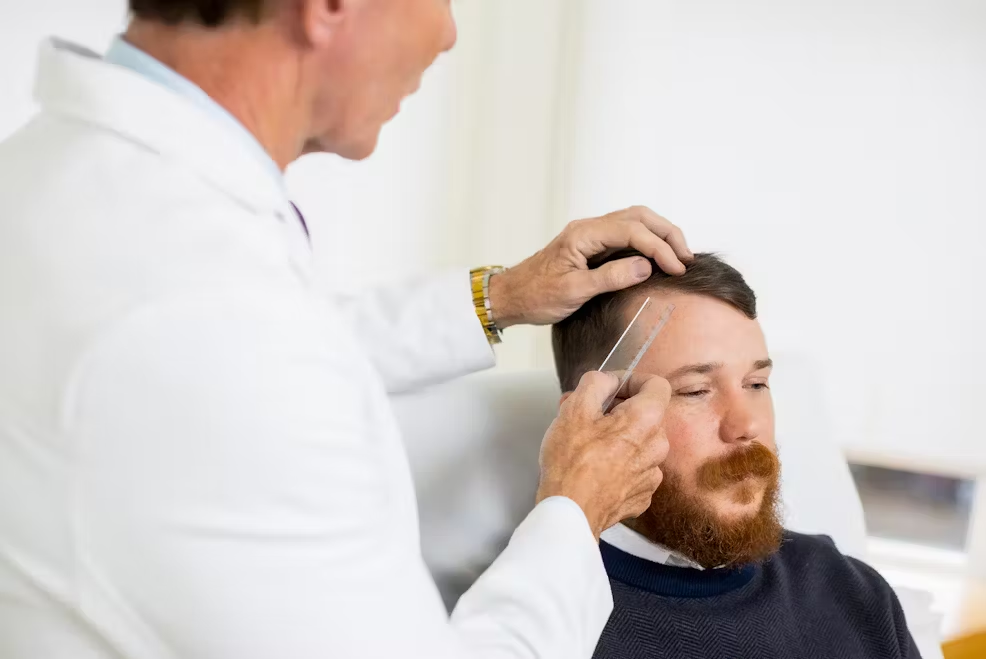
One of the clearest signs of a strong clinic is how it handles the first conversation. Hair restoration is not a one-size-fits-all treatment, and any provider that jumps too quickly to graft numbers or package pricing without understanding the patient’s hair loss pattern should raise questions.
A proper assessment looks at more than the area a patient wants to fill. It should consider donor strength, hair characteristics, age, likely future loss, medical background, and what kind of result will still look natural over time. This matters because a transplant is not simply about adding hair where it is thin today. It is about planning for how the patient will look in the years ahead.
Patients often arrive focused on the hairline, which is understandable, but the clinic’s role is to think more broadly. A responsible team will explain what is realistic, what may need to be staged carefully, and where restraint can actually lead to a better outcome. That kind of honesty is usually a far better sign than a consultation designed mainly to secure a booking.
Natural Results Depend On More Than Density
A lot of people researching hair restoration become fixated on numbers. How many grafts were used, how dense the result looks, or how quickly changes appear. These points have their place, but they do not tell the whole story. Natural-looking hair restoration depends just as much on design and judgement as it does on volume.
Hairline shape, angle, direction, and placement all matter enormously. The best results usually do not look aggressive or overly engineered. They look believable. That is especially important in the frontal area, where even small misjudgements can affect the whole face. A clinic needs to understand how to restore hair in a way that suits the individual rather than applying the same template to every patient.
This is where experience and attention to detail make a real difference. Patients should be looking for signs that the clinic values subtlety, proportion, and long-term planning, not only dramatic short-term transformation. A strong result should fit the person so naturally that it does not invite second glances for the wrong reasons.
The Treatment Journey Should Feel Properly Managed
People often focus heavily on the procedure itself, but the overall patient experience matters as well. Hair restoration is not just one appointment. It includes consultation, preparation, the day of treatment, aftercare, healing, shedding, regrowth, and ongoing communication. A clinic that manages this journey well usually gives patients far more confidence throughout the process.
That includes clear explanations before treatment, realistic guidance on recovery, and sensible support once the procedure is complete. Patients should know what to expect, what is normal, and when progress is likely to become visible. Good aftercare is not an optional extra. It is part of the treatment itself.
This is especially important because hair restoration takes patience. Even patients who understand the timeline can become anxious in the early months if communication is poor. A clinic that offers structured aftercare and stays engaged after the procedure often provides a much better experience than one that feels highly attentive only before payment is made.
The Right Clinic Will Consider The Person, Not Just The Procedure
Hair loss affects people differently. Some patients are mainly concerned with appearance in photographs or at work. Some want a subtle improvement that no one else will question. Others are dealing with long-standing self-consciousness and want to feel more like themselves again. A good clinic takes these personal factors seriously.
This matters because the best treatment plan is not always the most aggressive one. Sometimes the right answer is a conservative hairline, a focus on density in specific areas, or a staged approach that protects future options. A clinic should understand the patient’s lifestyle, expectations, and comfort level with recovery visibility as well as the technical side of treatment.
When a provider treats the patient as an individual rather than a case number, the plan usually becomes much stronger. It feels more considered, more realistic, and more aligned with what the person actually wants to achieve. That is often what separates a satisfactory experience from one that feels genuinely well handled.
Confidence Comes From Careful Choices
Choosing a clinic is ultimately about trust. Patients want to know they are placing their hair, appearance, and confidence in capable hands. That trust is usually earned through careful assessment, honest communication, natural design thinking, and a clear sense that the clinic is planning for the long term rather than simply selling a procedure.
A hair transplant can be a very positive step, but it deserves proper thought. The strongest clinics are usually the ones that combine medical judgement with aesthetic sensitivity and take the time to build a treatment plan around the individual in front of them. When that happens, the process feels less like a transaction and more like a well-managed decision that patients can move forward with confidently.
