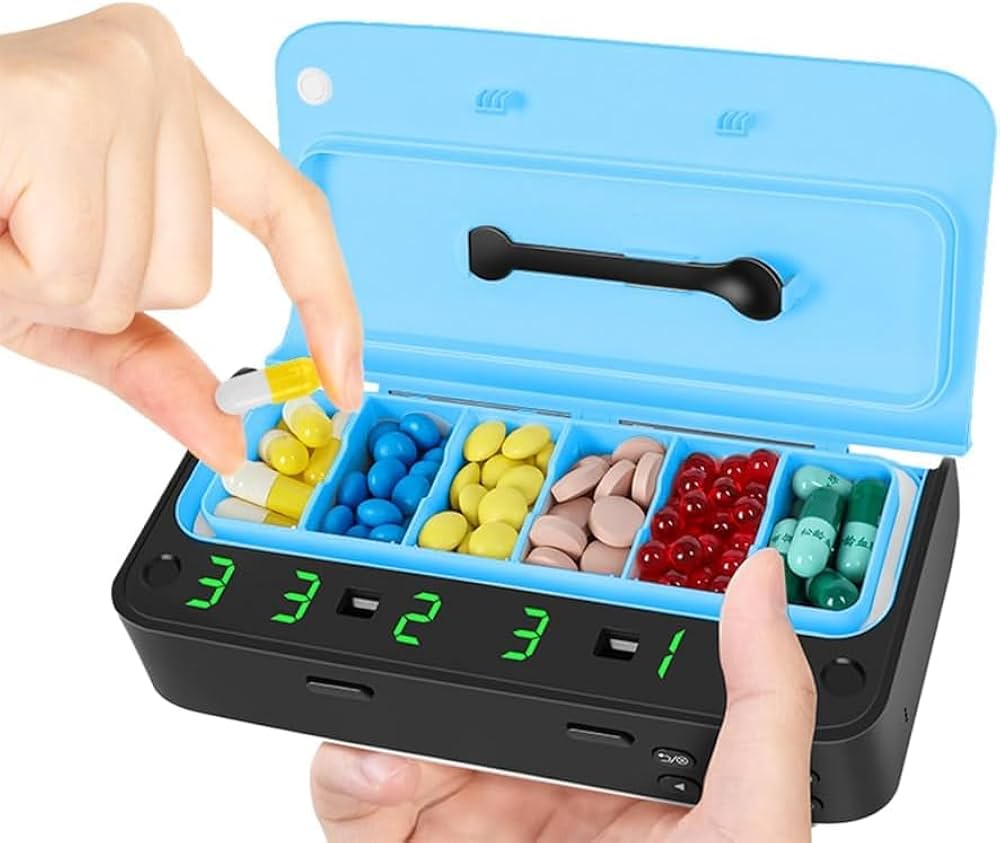
For decades, the basic act of taking medication has relied entirely on human diligence and trust. When a doctor writes a prescription, they must trust that the patient will take the correct dosage at the exact specified times. Conversely, patients must trust that the medication is actively targeting their underlying ailment without causing unseen physiological damage. However, human error, forgetfulness, and the hidden complexities of gastrointestinal absorption frequently interfere with this traditional treatment model.
The integration of advanced biomedical engineering, wireless communication, and pharmacology has introduced a groundbreaking transformation known as smart medication. Ingestible electronic pills equipped with microscopic sensors are redefining the boundaries of healthcare. These intelligent capsules do far more than deliver active pharmaceutical ingredients; they navigate the human gastrointestinal tract as microscopic diagnostic hubs, gathering and transmitting real-time biological data directly from inside the human body.
The Anatomy and Mechanism of Ingestible Sensors
To understand how a smart pill functions, it is necessary to examine the miniature technology packed inside an edible capsule. A standard smart pill typically consists of a conventional drug coating wrapped around a microscopic, biocompatible sensor assembly. This assembly generally includes an integrated circuit chip, a tiny radio-frequency transmitter, and a specialized internal power mechanism.
The power generation system represents a fascinating engineering breakthrough. Traditional lithium-ion batteries pose severe chemical toxicity risks if damaged inside the human digestive system. To eliminate this hazard, many smart pills utilize an ingestible battery that remains completely dormant until it enters the stomach.
-
Stomach Acid Activation: The sensor features tiny electrodes made from biocompatible minerals, such as copper and zinc.
-
Electrochemical Reaction: When the capsule dissolves in the stomach, the highly acidic gastric juices act as a natural electrolyte, reacting with the mineral electrodes.
-
Voltage Generation: This safe, localized chemical reaction generates a tiny electrical current, powering the internal microchip and transmitter for its journey through the digestive tract.
Once activated, the capsule begins logging critical physiological markers. The internal transmitter broadcasts this data via ultra-low-power signals to a wearable patch worn on the patient’s skin or directly to a nearby mobile device. From there, the encrypted data is uploaded securely to a cloud infrastructure, allowing physicians to view live diagnostic reports.
Solving the Crisis of Medication Non-Adherence
The most immediate clinical application for smart medication addresses one of the costliest and most stubborn problems in global healthcare: medication non-adherence. Millions of patients worldwide fail to take their medications exactly as prescribed by their healthcare providers.
This negligence is particularly dangerous for individuals managing severe, complex, or chronic conditions, such as cardiovascular diseases, organ transplant rejections, and advanced psychiatric disorders. When a patient misses a dose, their health degrades, frequently resulting in emergency room interventions, extended hospitalizations, and escalated healthcare costs. Traditional tracking methods, such as manual pill diaries or smart pillbox caps, only verify that a container was opened, not that the medication was actually swallowed and absorbed.
Digital medicine solves this transparency problem completely. The moment a smart pill reaches the stomach and generates its electrical current, it transmits an indelible confirmation signal. This signal provides timestamped, biometric proof of ingestion. If a critical dose is missed, automated software systems can send a gentle reminder to the patient’s smartphone or alert family members and care teams. This real-time visibility transforms passive patient compliance into an interactive, highly supportive monitoring ecosystem.
Continuous Deep-Tissue Diagnostics and Gut Mapping
Beyond tracking compliance, the next generation of smart medication serves as a powerful, non-invasive diagnostic toolkit. The human gastrointestinal tract is a complex, largely inaccessible environment. Standard diagnostic procedures, such as endoscopies and colonoscopies, are highly invasive, require sedation, and only capture visual structural images at a single point in time.
Smart pills, however, travel through the entire digestive system naturally, acting as mobile laboratories that measure biochemical variables continuously.
-
Real-Time pH Tracking: By measuring localized acidity levels from the stomach through the small and large intestines, smart pills can pinpoint the exact locations of inflammatory bowel diseases, ulcers, or localized bleeding.
-
Core Body Temperature Monitoring: Internal thermal sensors provide a highly accurate measurement of core body temperature. This data is critical for monitoring hypothermia, hyperthermia, and subtle inflammatory spikes associated with hidden systemic infections.
-
Gaseous Biomarker Detection: Advanced ingestible sensors can measure the concentrations of specific gases, such as hydrogen, methane, and carbon dioxide, produced by gut bacteria. This mapping provides unprecedented insight into the gut microbiome, helping clinicians diagnose small intestinal bacterial overgrowth and distinct metabolic disorders without relying on inaccurate breath tests.
This continuous biochemical tracking allows physicians to catch escalating conditions early, long before physical symptoms manifest or demand emergency surgical procedures.
Targeted Drug Delivery and Personalized Medicine
The ultimate evolution of smart medication lies in combining real-time diagnostic sensing with automated, targeted drug release mechanisms. Standard oral medications are designed to dissolve uniform fashion within the stomach, flooding the entire bloodstream to reach a specific organ. This systemic distribution means that high doses are required, which frequently triggers unwanted side effects in healthy tissues.
Smart pills are paving the way for localized, autonomous drug delivery. These advanced capsules contain miniature, sealed reservoirs of medication alongside their internal sensor suites. As the pill moves through the body, its sensors continuously analyze the surrounding environment.
For instance, when treating localized conditions like Crohn’s disease, the smart pill can detect the exact chemical signature of intestinal inflammation or the precise pH shift that marks the transition into the colon. The moment the internal processor identifies these specific environmental triggers, it activates a micro-actuator, opening the internal reservoir to release the concentrated medication directly onto the diseased tissue. This targeted approach maximizes therapeutic impact while keeping systemic side effects to an absolute minimum.
Addressing Privacy, Data Security, and Ethical Considerations
As with any technology that collects intimate biological data, the widespread deployment of smart pills introduces significant ethical and privacy challenges. Broadcasted physiological data must be protected with the highest standards of cryptographic security to prevent unauthorized intercept or exploitation.
Medical institutions and technology developers are implementing rigorous protocols to secure this internal data highway. All communications between the ingestible sensor, the wearable skin patch, and the mobile smartphone application use sophisticated end-to-end encryption. Patients maintain explicit ownership over their biometric data, granting or revoking access to specific healthcare clinics or family members via secure digital interfaces.
Furthermore, medical ethicists emphasize that smart medication must always function as a tool for patient empowerment and health optimization, rather than a mechanism for institutional surveillance or punitive insurance policy enforcement. Ensuring that patients give fully informed consent remains a foundational requirement as this digital medical frontier moves into mainstream society.
Frequently Asked Questions
What happens to the electronic chip inside the smart pill after it passes through the body?
The miniature electronic sensor assembly is completely non-digestible and is designed to pass naturally and safely through the gastrointestinal tract during standard bowel movements. Because the chip is extremely small and lacks sharp edges, patients generally do not feel its passage, and it is safely discarded without requiring any recovery procedures.
Is there any risk of experiencing an electric shock from the internal battery mechanism?
There is no risk of electrical shock. The current generated by the interaction of stomach acid with the biocompatible mineral electrodes is incredibly weak, measured in microamperes. This electrical energy is fully insulated within the capsule design and is far too weak to interact with human nerve tissue or cause any internal discomfort or physical damage.
Are smart pills safe for individuals who have a known metal allergy?
Smart pills use highly biocompatible materials, such as trace amounts of gold, silver, magnesium, copper, and silicon, which are distinct from the metals typically associated with contact allergies, like nickel. However, individuals with extensive or severe hypersensitivities to specific minerals should always review the exact structural composition of the ingestible sensor with their physician before initiating therapy.
Can a smart pill become trapped or stuck inside the digestive tract?
The risk of a smart pill becoming trapped is extremely low, mirroring the minimal risks associated with swallowing a standard large vitamin capsule. However, smart medications are generally contraindicated for individuals who suffer from severe physiological conditions like clinical bowel obstructions, severe esophageal strictures, or known narrow fistulas within the intestinal walls.
How does a physician determine the correct smart pill framework for a patient?
A physician evaluates the patient’s specific diagnostic requirements or compliance history. For example, if a patient requires verification of a complex medication regimen, a compliance-tracking pill is selected. If the goal is mapping digestive disorders, a specialized biochemical-sensing capsule is prescribed, and the data parameters are customized via clinical software.
Will ingestible smart pills replace traditional medical imaging like endoscopies completely?
While smart pills provide unprecedented biochemical data, real-time tracking, and continuous gas analysis, they do not replace standard visual imaging entirely. Endoscopies and colonoscopies allow gastroenterologists to perform direct visual inspections, capture high-definition video, collect physical tissue biopsies, and remove pre-cancerous polyps, making both technologies highly complementary.
How long does it take for a smart pill to complete its data transmission cycle?
The initial compliance signal is transmitted within minutes of entering the stomach as soon as the capsule shell dissolves and gastric fluid activates the electrodes. For diagnostic variants designed to map the gut, the sensor transmits data continuously throughout its entire journey, which typically lasts anywhere from twenty-four to forty-eight hours depending on an individual’s natural metabolic transit time.
